
The Department of Chemistry and Biochemistry offers exciting opportunities for students, researchers, and staff. With faculty leaders in the chemical and biomolecular sciences, and cutting-edge instrumentation and facilities, the Department is advancing 21st century science and education.
A core department of the flagship campus of the great State of Maryland, the Department annually bestows approximately 100 undergraduate degrees and 30 advanced degrees in Chemistry and Biochemistry. Nearly half of all University of Maryland undergraduates take chemistry during their first year, and advanced coursework in chemistry and biochemistry is required for a broad spectrum of campus majors in life and agricultural sciences, public health and engineering.
Interactive and Crossdisciplinary
The department blends chemistry and biochemistry with cross-cutting research programs in energy and environment, biomaterials and nanobiotechnology, advanced materials and quantitative science. Grounded in traditional subfields (analytical, biochemistry, inorganic, organic, and physical chemistry), research in the department extends from molecular biophysics and catalysis to environmental and polymer chemistry, and onto theoretical and computational chemistry. Nationally recognized, award-winning faculty instruct students and provide them with research opportunities that lead to their independent careers. In addition, vigorous collaborative interactions with nearby national labs (including NIH, NIST, and the FDA) expand departmental opportunities and research.
Education
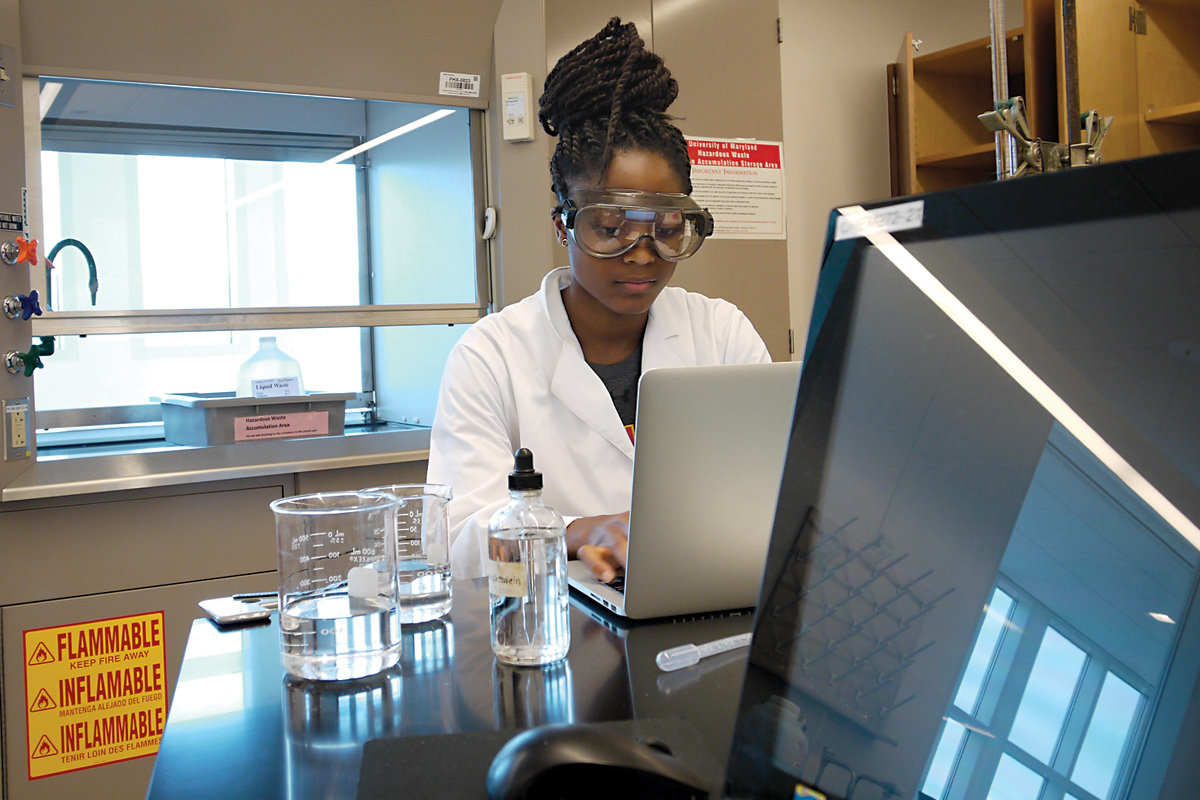
The educational program is designed to maximize student learning opportunities and laboratory experiences. The program allows students to build upon their one year of high school chemistry in a single-semester introductory course that deepens their understanding and skills. Students then proceed directly to the two-semester organic chemistry sequence with expanded context and progressive laboratories. Students whose emphasis is in biochemistry can then enroll in relevant courses a semester earlier than is traditional. A spectrum of elective coursework allows students to pursue their interests.
Research
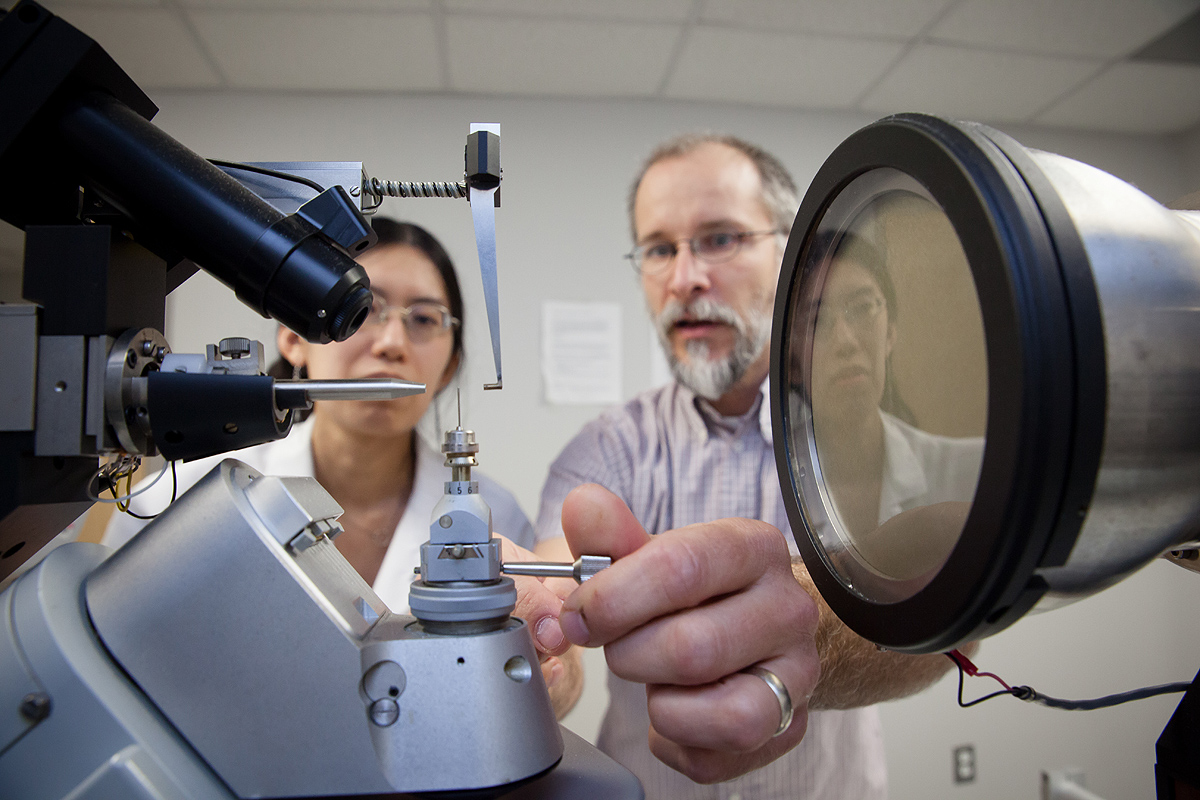 Research is a vital component of the department’s graduate programs, and undergraduate research is strongly encouraged. Both undergraduate and graduate students have impressive credentials, and the department’s programs enable them to enter positions in top educational programs or with leading employers. State-of-the-art instructional laboratories, including the St. John’s Teaching & Learning Center Chemistry Wing, which opened in 2017, aids the department’s teaching and research missions with modern facilities for instruction and synthetic research. The teaching and research facilities in the Bioscience Research Building, NanoCenter, and Physical Sciences Complex further enrich bio-inspired and chemical nanoscience at Maryland. The Department’s external committee of advisors includes distinguished representatives from the pharmaceutical and biotech industries. Our rapidly growing network of scientists and allied institutions continues to place Maryland at the leading edge of research in the chemical sciences.