Research Groups
Primary Investigator |
Research Overview |
Millard Alexander | Theoretical study of inelastic and reactive molecular collisions,
particularly those involving free radicals; the photofragmentation of
small molecules; and the structure and energetics of weakly bound
complexes involving open-shell species Understanding the Chemical Universe: Study Combining Experiment and Theory Affirms Key Premise of Quantum Chemistry |
Jeffery Davis | Supramolecular Chemistry, Molecular Recognition, Nanoscience and Nanotechnology, Bioorganic Chemistry, Separations Chemistry, NMR Spectroscopy, Synthetic Ion Channels |
Michael P. Doyle | Design and development of transition metal catalysts capable of high selectivity in organic chemical transformations and on oxidation reactions. Focus is on applications that are of biological and materials interest. |
Catherine Fenselau | Modification of protein structures and abundances by disease and chemotherapy; New methods for mass spectrometry-based proteomics; Rapid identification and forensic analyses of pathogens using mass spectrometry, proteomics and bioinformatics. |
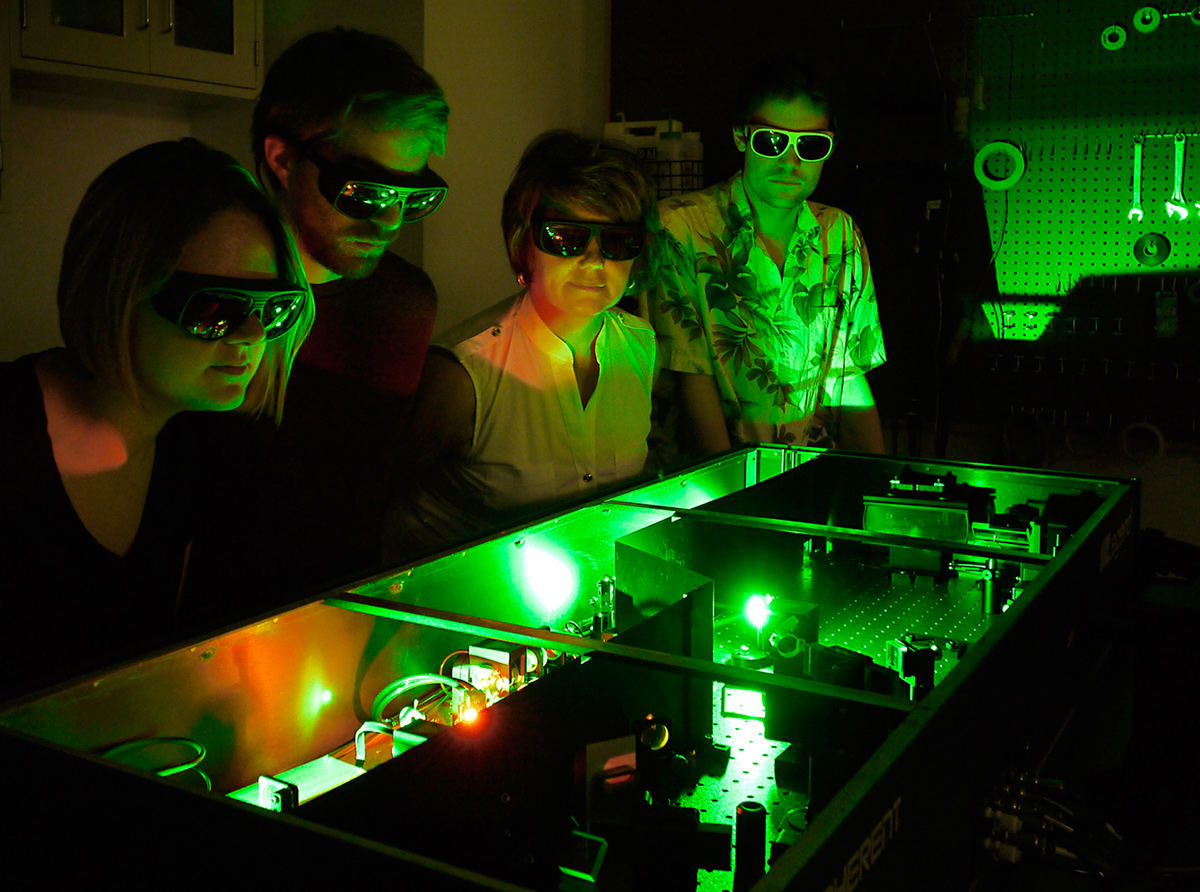
John T. Fourkas | Ultrafast nonlinear optical spectroscopy of liquids; dynamics of nanoconfined liquids; nonlinear optical microscopy; nontraditional approaches to micro- and nanofabrication; dynamics of single molecules and single nanoparticles. |
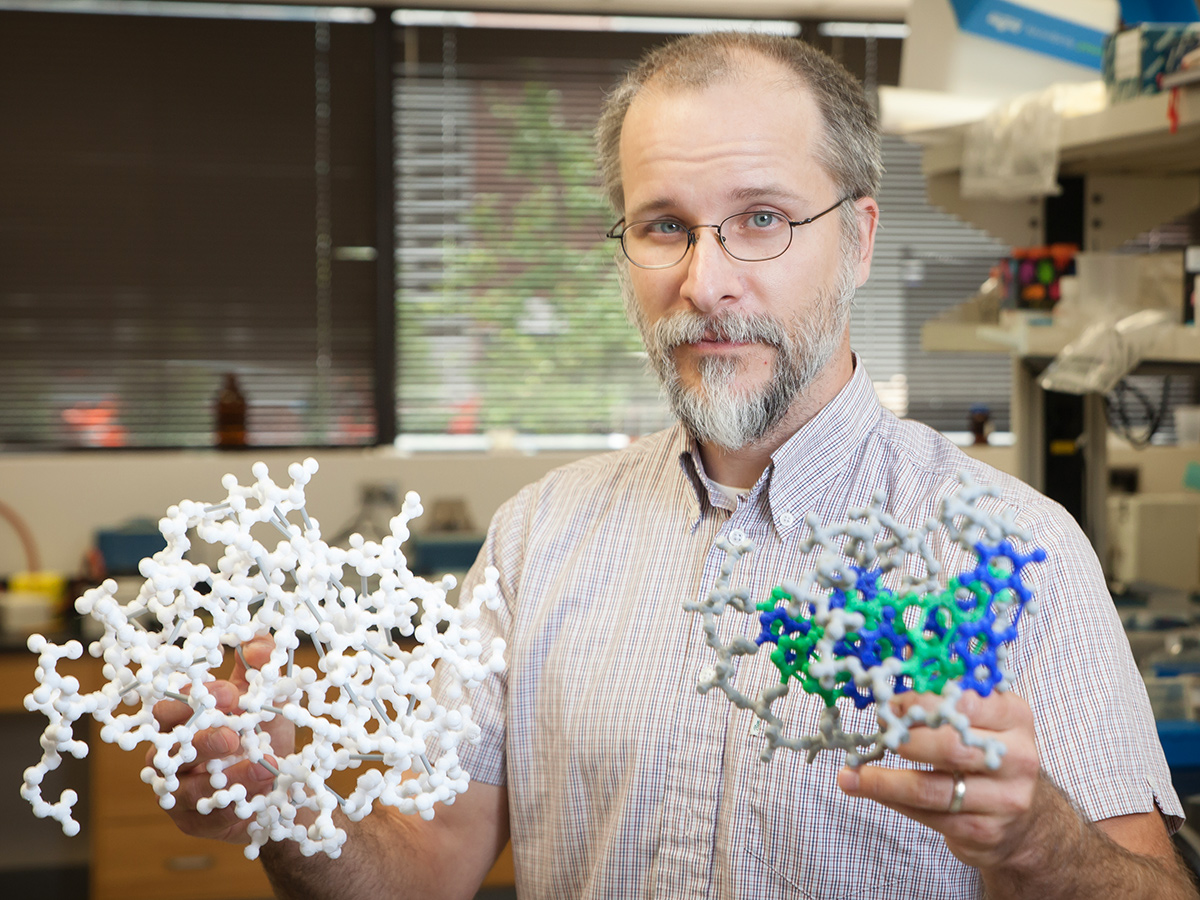
David Fushman | Structure, dynamics, stability, and function of biological macromolecules. Structural biology and molecular mechanisms of intracellular signaling. Ubiquitin-proteasome system. Structure and dynamics of multidomain proteins. Development and application of new robust theoretical and experimental approaches to protein structure and dynamics in order to understand their roles in protein stability and function. |
Lyle Isaacs | The Isaacs group is interested in supramolecular and synthetic chemistry with an emphasis on molecular container molecules known as cucurbit[n]urils (CB[n]). Molecular containers - most commonly cyclodextrins - have enormous everyday applications including scent release and odor control (e.g. Febreeze) in consumer products and foodstuffs. We believe that CB[n] containers will supplant the cyclodextrins in a variety of practical and academic applications with all the attendant societal impact. |
Jason Kahn |
|
Sang Bok Lee |
|
Alice Mignerey | Professor Alice Mignerey is a Nuclear Chemist with research programs in basic nuclear science and in applications of the nuclear analytical technique of Accelerator Mass Spectrometry (AMS) to environmental problems. Professor Mignerey's basic nuclear research is focused on understanding the behavior of nuclear matter under conditions of extreme density (pressure) and temperature. These conditions are postulated to have existed just after the Big Bang, when the protons and neutrons had not yet formed from their constituent quarks and the gluons which hold them together. This so-called quark-gluon plasma has been predicted to be accessible through heavy-ion reactions at high energies. The experimental program is centered at the Brookhaven National Laboratory RHIC accelerator where colliding beams of nuclei reach center-of-mass energies of 200 AGeV, producing conditions mimicking those of the early universe. Prof. Mignerey is a member of the PHOBOS Collaboration at RHIC. See the PHOBOS web site at http://www.phobos.bnl.gov for details on the goals of the PHOBOS experiment and a full list of publications. The research program in AMS has concentrated on the uses of the cosmogenic nuclides, such as C-14 and Cl-36, to study ground-water and soil systems. Technique development is currently being carried out with researchers at the Naval Research Laboratory Trace Element AMS facility (TEAMS) to allow dating separate organic fractions in the organic C-14 carbon pool. |